
The Best Dehumidifiers for UK and Irish Homes
For most homes, a quiet compressor dehumidifier of around 10 to 12 litres a day is the right buy. If the room is cold and unheated, choose a desiccant model instead. If the whole house is damp or you dry a lot of washing indoors, go up to 20 litres.
Do you actually need one?
A dehumidifier earns its place if you see two or more of these: windows streaming every morning, a musty smell in wardrobes, washing that takes days to dry, or black spots on window frames and ceilings. A cheap hygrometer settles it. Indoor humidity that sits above 60% for long stretches is where condensation and mould take hold. The aim is 40 to 60%.

TempPro digital hygrometer
Shows your indoor humidity at a glance. Above about 60% is when condensation and mould take hold.
Compressor or desiccant
Compressor dehumidifiers are the most efficient choice in a heated home. They work like a small fridge, cooling the air so the water drops out. Their weakness is cold rooms: below about 15°C they slow down noticeably.
Desiccant dehumidifiers pull water out with an absorbent wheel. They keep working in cold, unheated rooms, garages and boxrooms, are lighter and quieter, and give off a little warmth. They use more electricity, so they make most sense where a compressor model would struggle.
What size
| Home | Look for |
|---|---|
| Bedroom or small flat | 10 to 12 litres a day |
| Average house, some laundry indoors | 12 to 20 litres a day |
| Large or very damp house, lots of laundry | 20 litres a day or more |
The litres-a-day figure is measured in warm, very humid test conditions, so real-world collection is lower. Buy for the room you have, with a little headroom.
The ones worth buying
For bedrooms: quiet and good-looking
Most window condensation forms overnight, when two people breathing in a closed bedroom add moisture while the room cools. A bedroom unit needs a proper night mode and a design you are happy to live with.

Bosch Dry 1000 dehumidifier
Small, quietly designed and only 34 dB in night mode. Sized for a bedroom, where most window condensation starts overnight.
For cold rooms
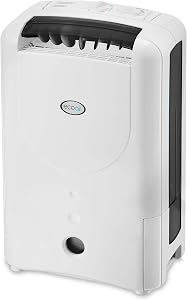
EcoAir DD1 Simple desiccant dehumidifier
Desiccant models keep working in cold, unheated rooms where compressor units slow down. Light and quiet.
For the whole house and heavy laundry

Russell Hobbs 20L dehumidifier
Twenty litres a day for bigger or damper houses, and for families drying a lot of washing indoors.

Pro Breeze 12L dehumidifier
A long-standing favourite for UK homes. Pulls the moisture from drying washing and stops it settling on windows.
For a cupboard or one damp corner

EasyAcc mini dehumidifier
Small enough for a wardrobe, boxroom or cupboard. Not for a whole room, but good for one damp corner.
Getting the most from it
- Put it in the room with the problem and close the door. A dehumidifier in the hall cannot keep up with a bedroom.
- Set it to 50 to 55% and let auto mode do the rest, rather than running it flat out.
- For washing, put the airer and the dehumidifier in the same small room with the door shut. Laundry mode dries a load far faster than an open room.
- Keep it a hand's width from the wall so air can flow, and empty or plumb the tank so it does not stop overnight.
- Pair it with a timer plug if you want it running only while washing dries.
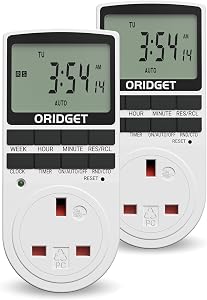
Oridget digital timer plug, 2-pack
Puts a heated airer or heater on a timer so it never runs all night by mistake.
For the free fixes that cut condensation before you spend anything, read why your windows are wet every morning.